An illustration tracing a loop from a honeycomb crystal lattice through a stacked layered material, a device array, a circuit grid, and a neural network, with arrows running in both directions.
Aditya Kumar, smiling, wearing a grey suit and dark red tie against a grey studio background.

Aditya Kumar

PhD Candidate, Experimental Physics

contact@aditya-kumar.de

Kläui Group, Johannes Gutenberg University Mainz

Hello there!

I am an experimental physicist with 7 years of research experience in materials for future electronics (2D materials for Spintronics). Currently working on lab automation and data pipelines for agentic research.

I built this site to solve a verz specific problem. "Aditya Kumar" is such an incredibly common name that a German conference once accused me of double-submitting abstracts thanks to a name doppelgänger. This website is my attempt to make myself searchable. Welcome, I hope you found the right Aditya. Here you can find my research, other projects that I have worked on and latest updates on conference and outreach. If you came across my work and wanted to know more. Thank you for your interest, please let me know if you have any questions or suggestions. If we saw each other at some conference and forgot to exchange contacts, sorry for that. Write me a hello :)

What I work on

Research

Experimental physics for 2D materials

I make magnetic materials a few atoms thick, fabricate devices out of them, and chatracterize their structural and functional properties for their potential application in future electronic devices.

Software

Automation and analysis

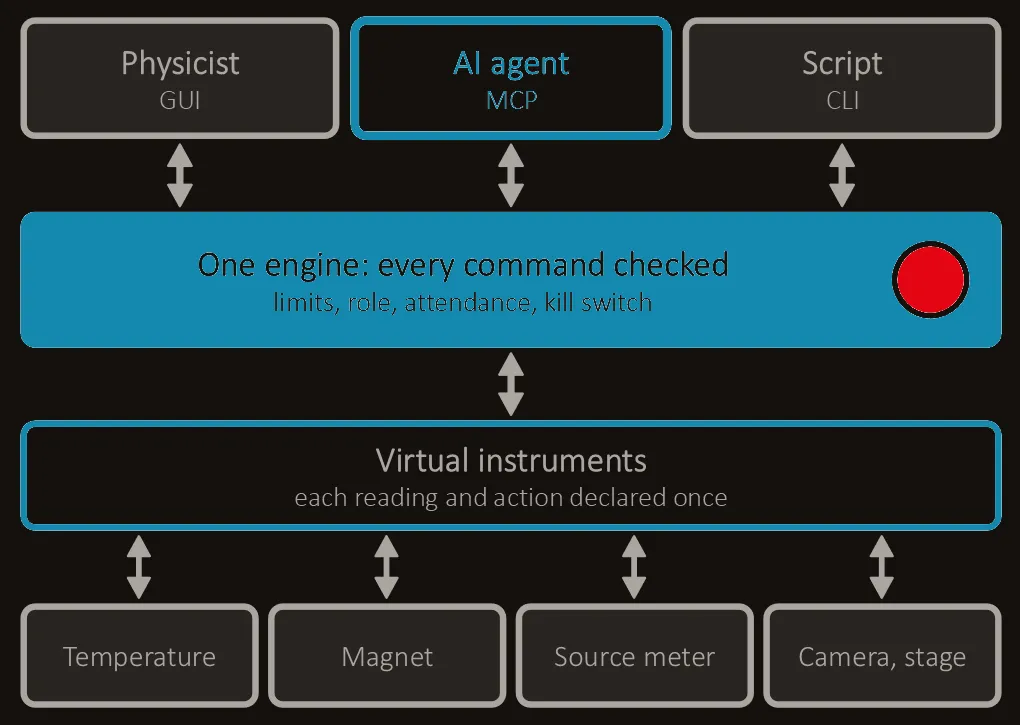
I write the software the instruments run on and the code that processes the generated data. One part keeps a measurement going unattended for a day at a time; the other turns the recorded files into comparable numbers.

The bridge

Agentic research

Since the release of Claude Code I saw how much of my job as researcher can be automated. It's called claude code but that was able to partial support in all parts of work apart from manual labour as a researcher. I kickstarted and currently leading the group's effort on Agnetic AI for our spintronics lab.

Selected work

A colour-coded magnetic induction map of the device cross-section: concentric contour loops in green, red and violet on a dark field, crossed by two horizontal orange dashed lines marking the layer interfaces.

Switchable exchange bias between orthogonal 2D magnets

Research

Magnetic coupling between two stacked crystals whose preferred directions are perpendicular, with the direction of the effect set by a field pulse at operating temperature and the mechanism imaged by electron holography.

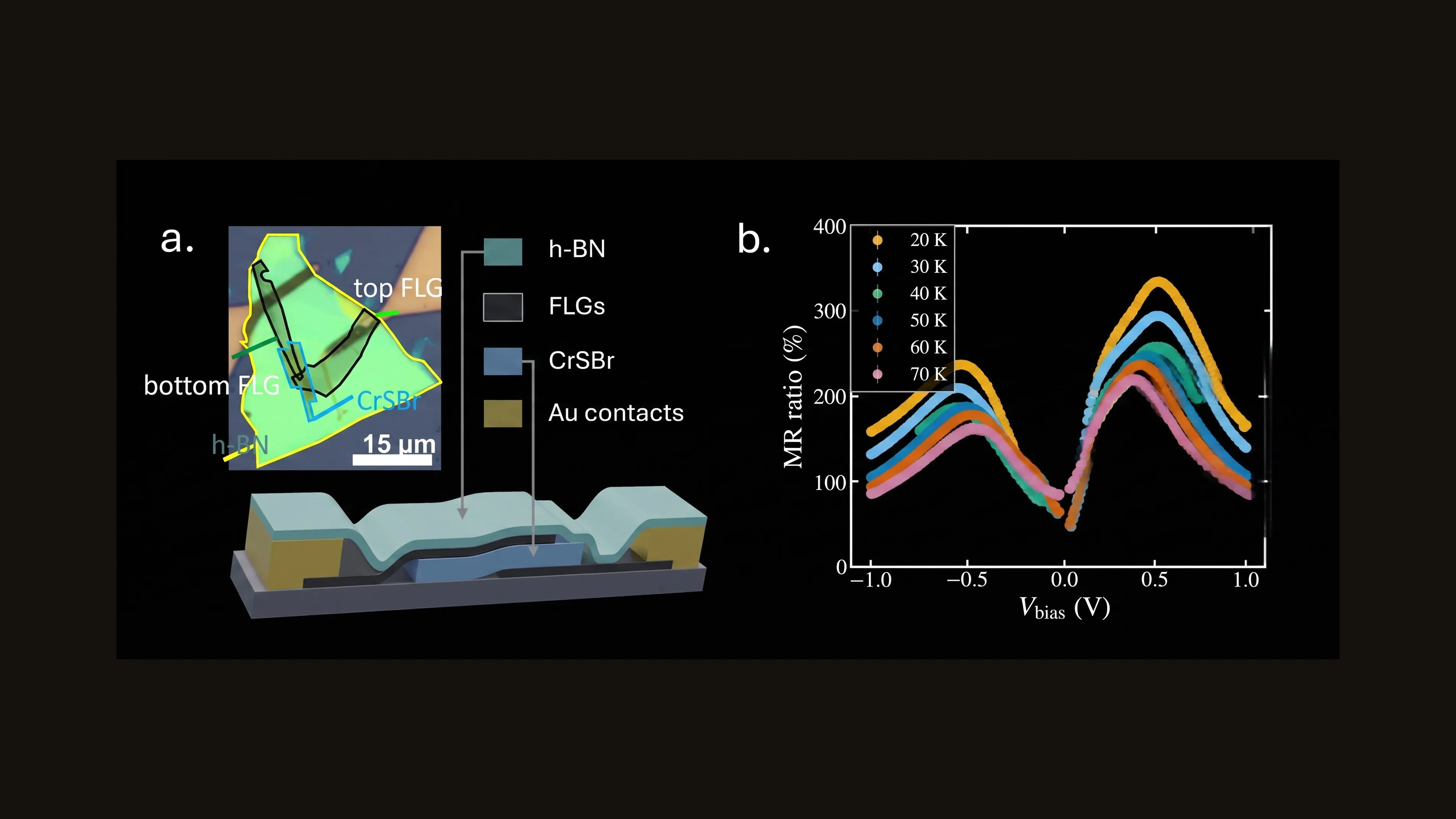
An optical micrograph of the junction with the h-BN, few-layer graphene and CrSBr flakes outlined in yellow, black and blue against a 15 micrometre scale bar, above a three-dimensional cutaway schematic of the same stack showing teal h-BN over black graphene electrodes, a blue CrSBr layer and gold contacts on a dark substrate, with a colour key naming each material.

350% bias-tunable magnetoresistance in CrSBr

Research

A junction with no magnetic electrodes, where the antiferromagnetic order of the CrSBr barrier itself sets the resistance and the operating voltage sets the size of the effect.

A neural-network diagram of interconnected teal and slate nodes, cropped from the site's materials-to-models loop illustration, with the loop's arrows passing behind it.

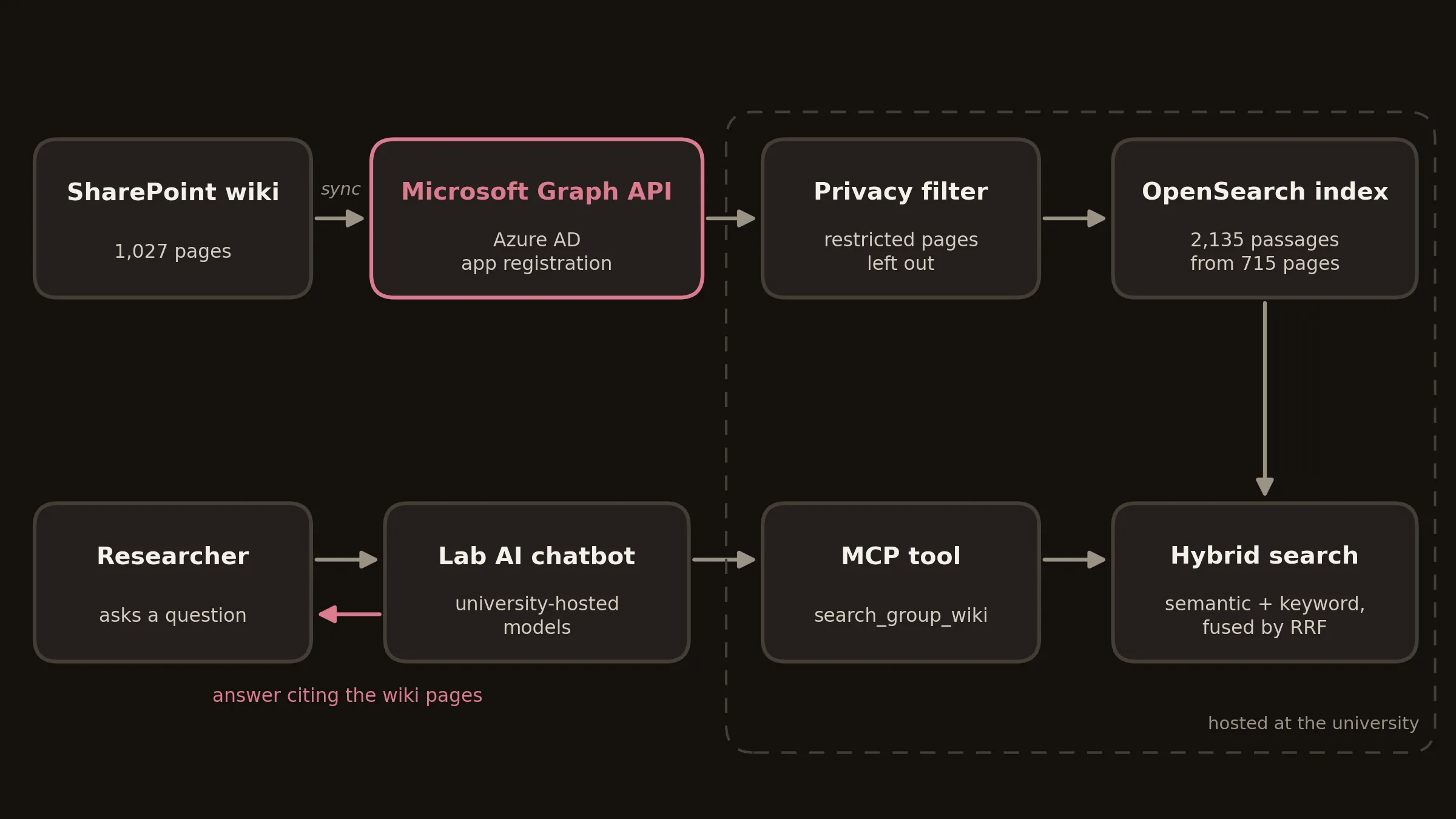
Agentic AI for a Physics Lab

Project

A lab-wide initiative I started and lead, making the group's papers, wiki, and instruments usable by AI agents, with every answer traceable to its source.

CryoSoft

Project

A public Python instrument-control stack that runs cryogenic transport measurements unattended for 20 to 30 hours at a stretch, with software-enforced safety limits.

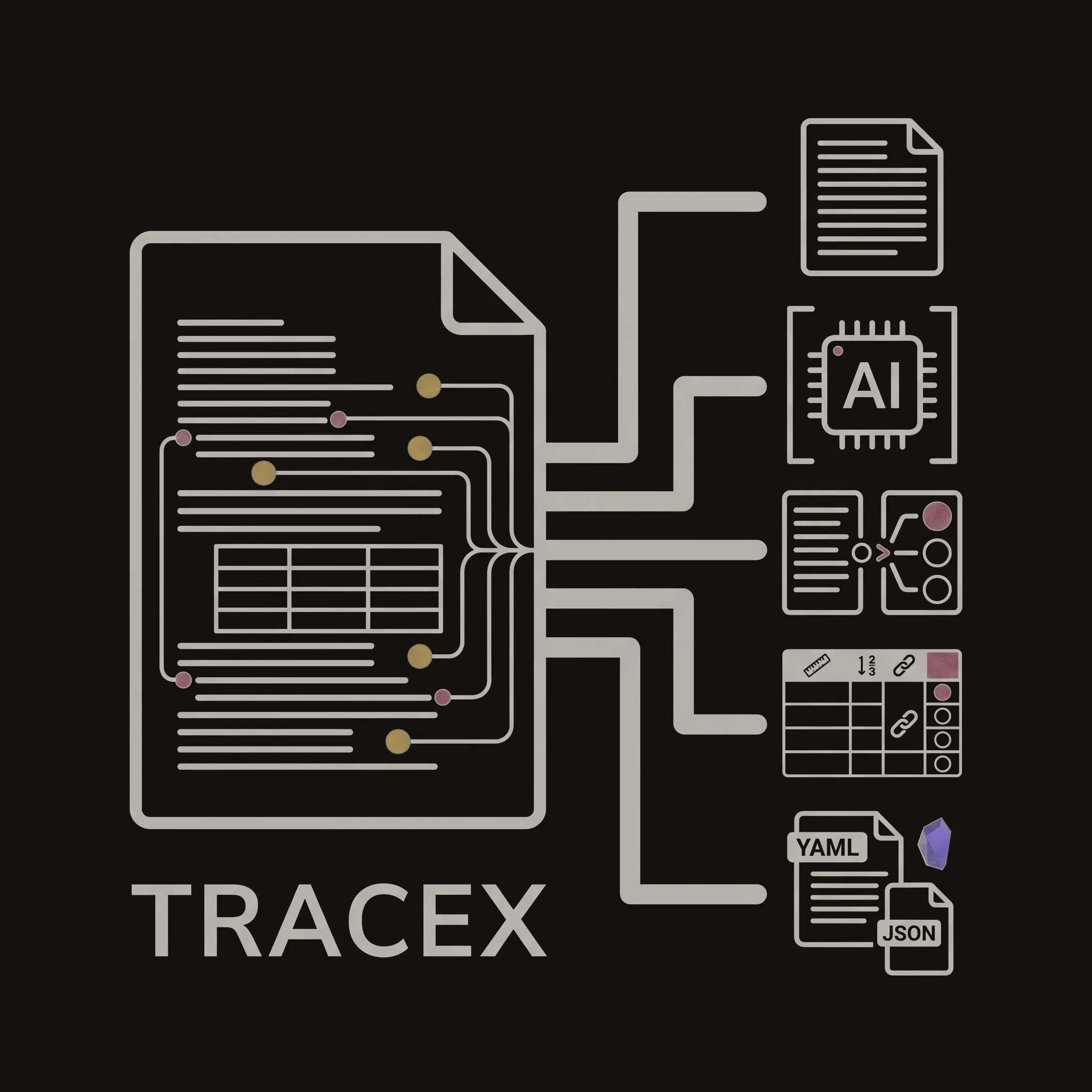
TracEx

Project

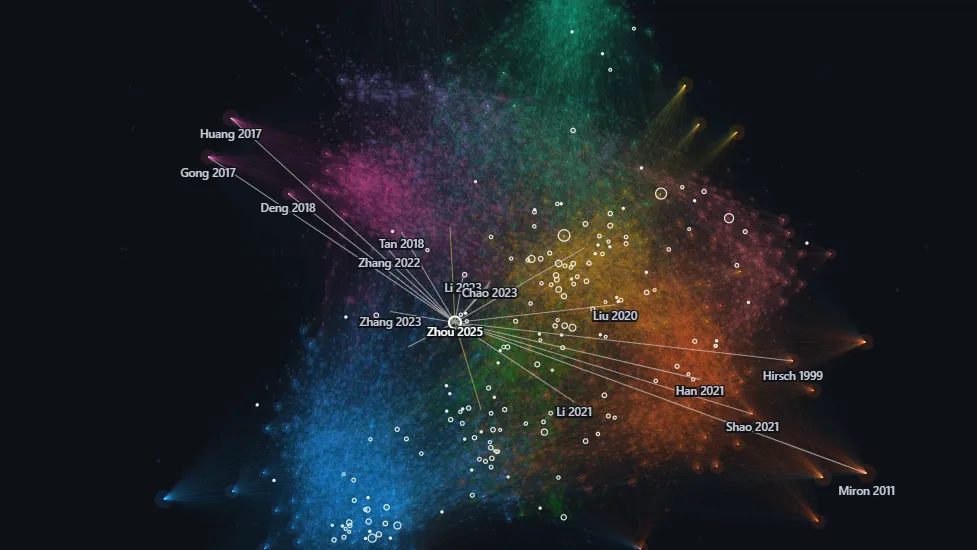
An LLM-based extraction tool that ties every number it pulls from a scientific paper back to the exact sentence it came from, so claims stay checkable.

Let's talk

Looking for someone who can move between the lab bench and the codebase. The full picture is in the CV, and a direct message is always welcome.